
Bukayo Saka's name rarely appears in discussions of Arsenal's academy without a caveat about patience. Yet the winger's rise from Hale End to becoming a first-team fixture illustrates a broader shift in how the Arsenal youth team operates. The club's under-18 and under-21 sides no longer function as a distant reserve;they are integrated into a system where individual development plans are reviewed weekly by coaches who sit within walking distance of the senior training ground. That proximity matters. When Emile Smith Rowe broke into the side under Unai Emery, the feedback loop between youth coach and first-team staff was measured in hours, not weeks.Watching Arsenal's under-18s at London Colney offers a different picture from the slick highlights packages. The football is direct, sometimes scrappy. Midfielders are encouraged to take risks in possession even when it invites pressure, a directive that has produced both stunning goals and careless turnovers. Max Dowman。a schoolboy who has trained with the under-18s, embodies this approach: he dribbles out of tight spaces that most coaches would instruct him to avoid. The trade-off is deliberate. Technical bravery is prioritised over safe circulation, and results at youth level are treated as secondary to individual progress. That philosophy explains why the Arsenal youth team has produced more first-team debutants in the past five seasons than any other Premier League academy except Chelsea's.
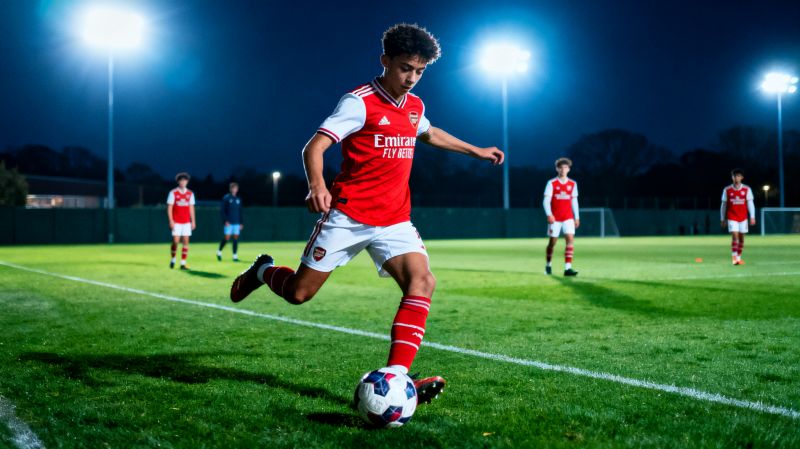
Facilities tell part of the story. The Hale End academy building。renovated in 2021, includes a dedicated analysis suite where players review clips within twenty minutes of a match ending. Nutritionists and sports psychologists are available on-site three days a week, not as occasional visitors but as staff embedded in the weekly routine. I spoke with a parent of an under-16 player who described the induction process as 'relentless but fair'—players receive written feedback after every game, with specific action points rather than vague praise. That level of detail separates Arsenal's approach from academies that rely on tournament exposure alone.The pathway to the first team remains brutally narrow. Of the fifteen scholars who signed professional contracts in 2022, only three have made competitive senior appearances. Reiss Nelson's loan spells and later squad role illustrate the awkward middle ground: too good for youth football, not yet trusted for consistent Premier League minutes. Arsenal's loan manager now arranges placements based on positional need in the senior squad, not merely on club size. A left-back might be sent to a Championship side that plays a back four。mirroring Mikel Arteta's system. This specificity is new. Five years ago, loans were often scattered and poorly monitored.Critics point to a different concern: the Arsenal youth team's results in the Premier League 2 have slipped, with the under-21s finishing mid-table in consecutive seasons. Yet the club's internal metrics weight individual technical markers—passing under pressure, scanning frequency, recovery runs—more heavily than league position. Whether that produces more Saka-level breakthroughs or simply more polished Championship players remains an open question. For now, the pipeline runs hot, and the evidence sits in the first-team squad list, where academy graduates occupy six spaces. That number。
not the trophy cabinet at Hale End, is the real scoreboard.